More Than Sustainability: Why True Regenerative Business Is Crucial
Building resilient communities through ecology, equity, & collective action
Part One: What It Means to Build a Business That Gives Something Back
Sustainability has become one of those words that gets slapped onto just about anything.
A green label.
A reusable cup.
A pledge buried somewhere on a company website.
Maybe a recycling bin in the break room.
Those things are not necessarily bad. They’re just nowhere near enough. One of the most visible places to begin is the landscape.
The standard commercial landscape usually consists of turfgrass, a few heavily pruned shrubs, lots of mulch, and an irrigation system working overtime to keep everything alive. It requires mowing, blowing, fertilizing, watering, trimming, hauling, and then doing all of it again. We have somehow accepted this as normal.
But a commercial property could just as easily support native grasses and wildflowers, shade trees, pollinators, birds, healthier soil, and stormwater infiltration. Once established, a well-designed native landscape can require far less water and routine maintenance than conventional turf.
It also doesn’t need to be attacked with gas-powered equipment every week.
Native plants don’t need gas-powered mowers … your
future self (and everybody’s lungs) will thank you.
This does not mean abandoning a property to weeds or making it unusable. It means designing the space intentionally around the climate and ecology we actually have.
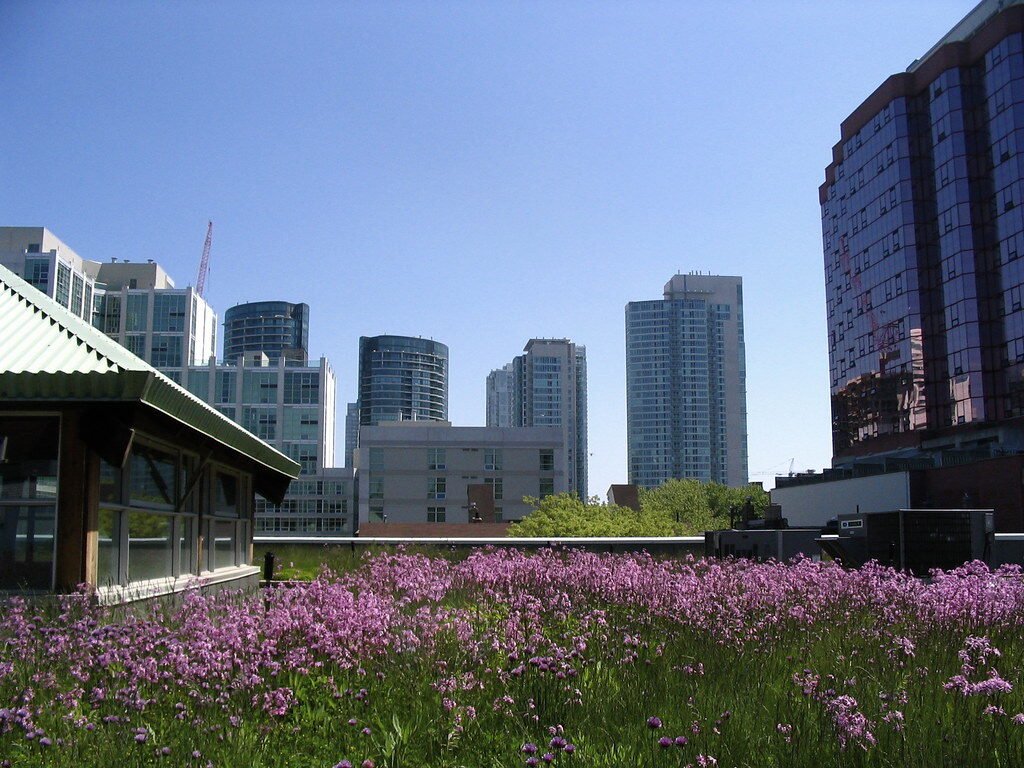
Native landscaping can create a property that is beautiful, recognizable, and full of life. It can give customers shade. It can reduce maintenance costs. It can help absorb rainwater instead of sending it rushing across pavement. It can also become a small but meaningful patch of habitat in a landscape where habitat has become dangerously fragmented.
Even a tiny space matters. A narrow planting bed, a courtyard, a strip along a parking lot, or a handful of large containers can feed pollinators and show people what is possible.
A business can grow food, too
Restaurants, cafés, bars, grocers, and event spaces have an especially fun opportunity: grow something people can actually eat. An edible landscape does not have to be a large farm or an elaborate rooftop operation. It might be herbs beside a patio, peppers in containers, a small fruit tree, or a pollinator garden mixed with edible plants.
Freshly harvested ingredients taste better. Customers notice. Employees often enjoy participating. And there is something deeply satisfying about serving food that was grown twenty feet from the kitchen rather than shipped hundreds or thousands of miles.
Of course, a few basil plants will not repair the entire food system. That isn’t the point.
The point is to shorten the distance between people and the things that sustain them… and to start rebuilding a culture in which food, soil, water, and habitat are visible parts of everyday life.
Edible gardens mean fresher ingredients, better flavor, and one less patch of wasted space.
Water should be treated like the precious resource it is
North Texas receives plenty of rain over the course of a year. The problem is that it often arrives all at once, runs across roofs and pavement, overwhelms drainage systems, and disappears downstream. Then, a few weeks later, we use treated drinking water to keep ornamental grass alive. This is a design problem.
One inch of rain falling on a 1,000-square-foot roof can produce more than 600 gallons of water. Rain barrels, cisterns, rain gardens, bioswales, permeable surfaces, and thoughtfully placed native plants can slow that water down and put it to work.
Depending on the property and local regulations, businesses may also be able to reuse graywater or condensate from air-conditioning systems. Restaurants and food-based businesses can compost suitable organic waste rather than sending all of it to a landfill.
These systems are not merely decorative “green features.” They can reduce water bills, ease pressure on public drainage infrastructure, improve soil, and help landscapes survive periods of intense heat.
…and yes, it is genuinely delightful to watch a garden make it through a Texas summer on water that would otherwise have gone down a storm drain.
Passive energy & smart
shading can cut bills
without cutting comfort.
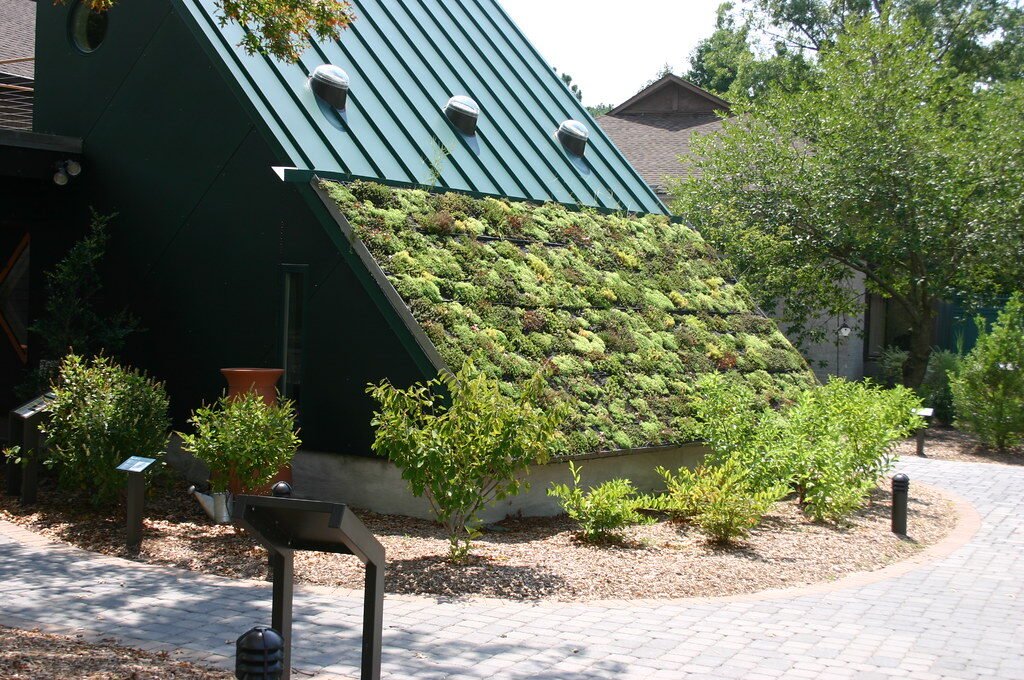
Shade is infrastructure
Trees are not landscaping accessories. In Texas, they are public-health and energy infrastructure.
A mature shade tree can make the space beneath it dramatically cooler than the surrounding pavement. Properly placed trees can reduce the heat absorbed by a building, lower cooling demand, make outdoor areas usable, and protect customers and employees from brutal summer temperatures.
That matters in communities already burdened by heat islands, poor pedestrian infrastructure, limited tree canopy, and high energy costs.
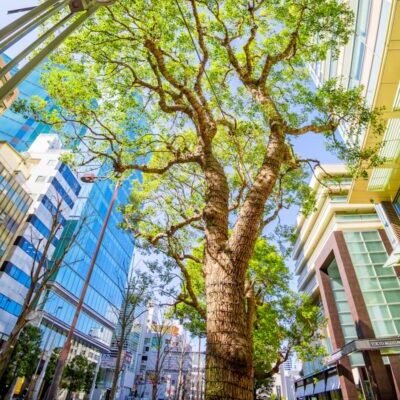
Existing healthy trees should be protected whenever possible. It takes decades to replace the shade, habitat, stormwater capture, and cooling provided by a mature tree. Planting three tiny trees somewhere else does not instantly replace one large tree that was unnecessarily removed.
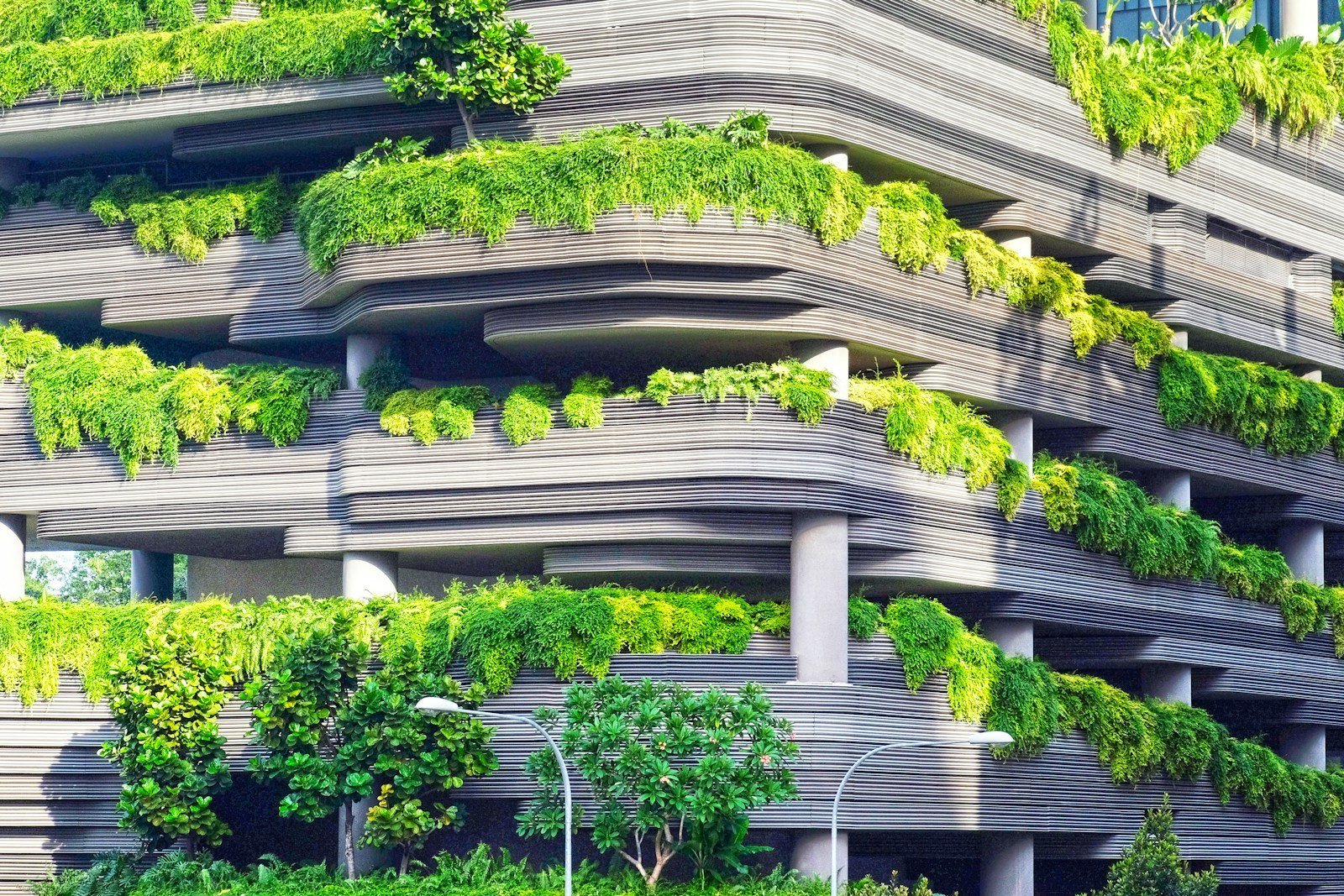
Buildings can also make better use of shade structures, natural light, ventilation, reflective materials, and passive cooling. Not every improvement requires rebuilding from the ground up. Sometimes the smartest intervention is a tree, an awning, window film, or a change in how a space is used.
Businesses should also question whether every employee needs to commute to an office simply to occupy a chair. Flexible and remote work can reduce transportation emissions, energy use, and stress while allowing people to work in environments where they are actually productive.
Regeneration includes people
A business is not regenerative if its landscaping is beautiful but its workers are treated as disposable.
Environmental responsibility cannot be separated from labor, health, accessibility, equity, or community wealth. Hiring locally, paying people fairly, using local vendors, purchasing from small and historically excluded businesses, and creating accessible spaces all help keep resources circulating within the community.
This is where regenerative business moves beyond an environmental checklist.
Where does the business’s money go?
Who benefits from its presence?
Who bears its environmental costs?
Does it contribute to the community, or does it simply extract customers, labor, land, and resources from it?
There is no single perfect answer, but these are questions every business claiming to care about sustainability should be willing to ask.
Repair things. Share things.
Compost things. Make less trash.
Waste reduction does not need to be glamorous.
Repair what can be repaired.
Reuse what can be reused.
Buy durable equipment.
Avoid disposable junk when a practical alternative exists.
Donate surplus materials.
Share tools.
Compost suitable organic waste.
Make it easy for customers and employees to participate.
…and before buying something marketed as “green,” ask whether it needs to be purchased at all. Some of the most regenerative choices are remarkably ordinary.
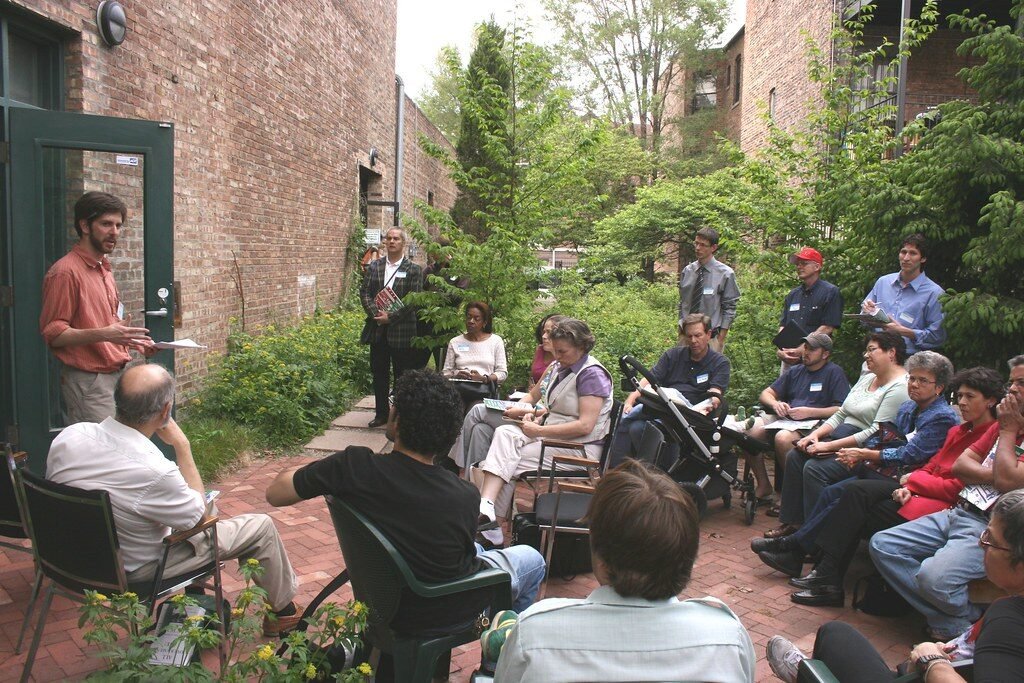
Businesses can also invite employees, customers, and neighbors into the work through planting days, habitat projects, workshops, volunteer events, or community partnerships. These activities should not become unpaid labor disguised as corporate virtue, but when they are organized thoughtfully, they can build real connection and shared ownership.
Show people what you’re doing… but be honest about it
If you create a pollinator garden, install a rainwater system, protect a mature tree, reduce waste, or begin buying locally, talk about it. Not because every small action deserves a self-congratulatory press release, but because visible examples help other people imagine what they could do.
Explain what worked. Explain what didn’t. Share what the project cost, what you learned, and what you plan to try next. Avoid pretending that one garden bed has made an otherwise harmful business “sustainable.”
People can usually smell greenwashing. Honest progress is more compelling anyway.
It isn’t about perfection. It is about taking responsibility, making better choices, and continuing to build from there.
So, what does a regenerative business actually look like?
It might have native habitat in place of unused turf.
It might collect rainwater, protect mature trees, compost food waste, grow herbs, reduce pavement, offer shade, purchase from local suppliers, allow flexible work, pay employees fairly, or support restoration projects beyond its own property.
Ideally, it does several of those things… and understands how they connect.
Regeneration is not a product a business can purchase. It is a way of thinking about relationships: between the business and the land, the watershed, its workers, its customers, its neighbors, and the generations who will inherit whatever we build.
Or, to put it less delicately:
Green infrastructure out the ass… rainwater, pollinator gardens, rooftop vegetables, native landscaping, shade trees, composting, and local jobs.
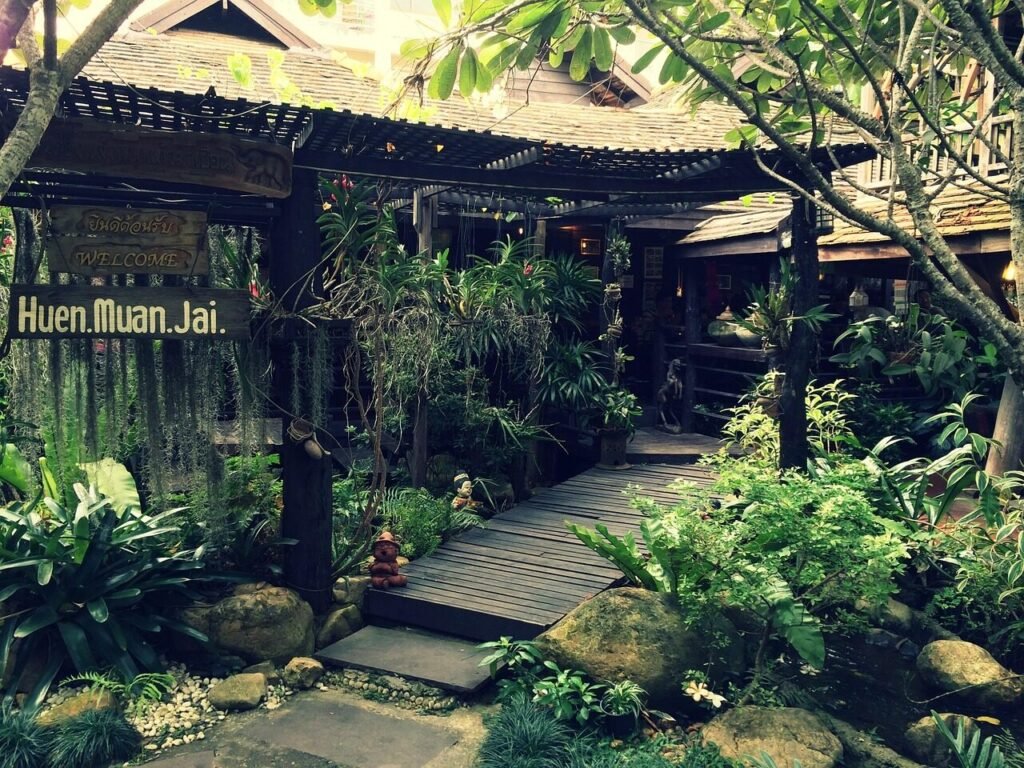
That is the future I want to help build: not businesses decorated to look sustainable, but businesses rooted in place and actively participating in the repair of their communities.
You do not have to do everything at once
Start by looking at what you already have, then ask yourself:
- Where does water flow when it rains?
- Which parts of the property become dangerously hot?
- Is there turf nobody uses?
- Could an existing tree be better protected?
- What gets thrown away every week?
- Could something be grown, repaired, reused, shaded, shared, or sourced closer to home?
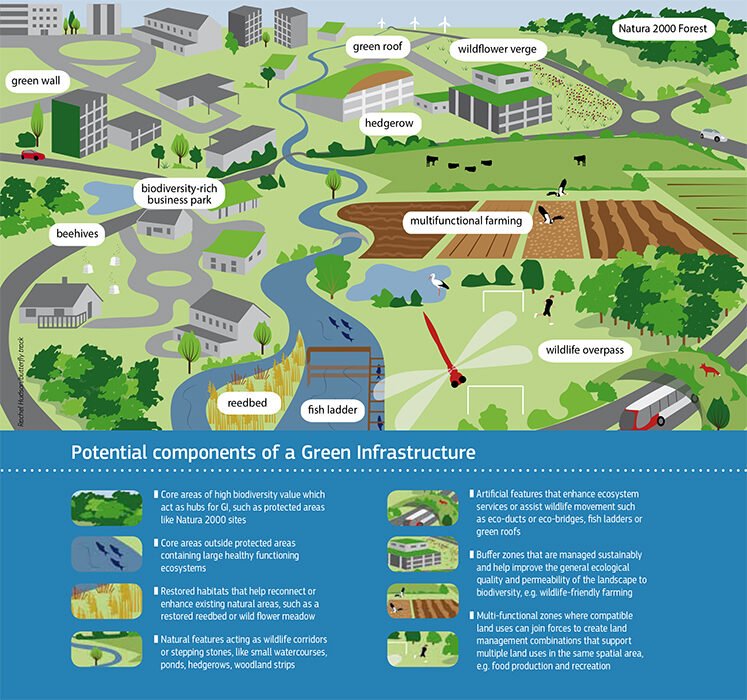
Choose one place to begin, then build from there.
Rooted Futures Collective works with local businesses, institutions, and neighbors to develop native landscapes, edible gardens, water-conservation systems, habitat projects, and other forms of regenerative community infrastructure. We are especially interested in projects that demonstrate what is possible and make ecological stewardship visible and accessible to the wider community.
If your business has a patch of land, a stubborn drainage problem, a sunbaked entrance, unused roof runoff, surplus materials, employees who want to get involved, or simply the feeling that you ought to be doing more, let’s talk.
In the next parts of this series, we’ll dig further into rainwater harvesting, native and edible landscapes, passive cooling, waste reduction, and the practical process of turning these ideas into working systems.
We have plenty to repair.
We also have plenty to work with.
Want to learn more?
Download the Regenerative Business Checklist → HERE
Your business doesn’t have to go this alone, as this is exactly the kind of work Rooted Futures Collective exists to support. We partner with local businesses, institutions, and neighbors design and implement native landscapes, edible gardens, rainwater systems, and other regenerative infrastructure that strengthens both community and ecosystem health. If you’ve been feeling the pull to do something like this, consider this your invitation. Whether you want to collaborate, contribute materials, or start something on your own property, we’re here to help you bring your vision to life.
Sources & Further Reading
Regenerative business practices are grounded in decades of research across soil science, urban ecology, water management, and economic resilience. Rooted Futures Foundation integrates these research-backed principles into real-world projects that help businesses and communities reduce costs, restore ecosystems, and build long-term resilience.
The following resources provide deeper insight into the concepts discussed above:
- U.S. Environmental Protection Agency — Green Infrastructure Resources
- U.S. Department of Agriculture — Soil Health and Regenerative Land Management
- Texas Water Development Board — Rainwater Harvesting and Water Conservation
- Texas A&M AgriLife Extension Service — Sustainable Agriculture and Land Stewardship
- Lady Bird Johnson Wildflower Center — Native Plants and Ecological Landscaping
- U.S. Department of Energy — Passive Solar Building Design
- National Renewable Energy Laboratory — Passive Energy Systems Research
- U.S. Forest Service — Urban Forestry and Environmental Benefits
- National Oceanic and Atmospheric Administration — Climate and Ecosystem Impacts
- United Nations Environment Programme — Global Environmental and Regenerative Development Research
- Project Drawdown — Science-Based Climate and Regenerative Solutions
- U.S. Green Building Council — LEED and High-Performance Building Standards
These sources reflect a growing scientific consensus: regenerative land use, passive energy design, and ecological stewardship are not fringe ideas… they are practical, proven pathways to healthier communities and more resilient local economies.