More native trees, more habitat, and another big step forward for our work in Balch Springs
We have some pretty exciting news: Rooted Futures Collective has been awarded a $5,000 grant through H-E-B’s Trees for Texans program, part of a statewide conservation initiative managed in partnership with Texan by Nature!
This one means a lot to us.
Much of our work comes back to a fairly simple question: how do we make the places we live healthier, more resilient, and more useful for both people and wildlife?
Sometimes that means education, planning, research, or community organizing. Sometimes it means getting outside, digging holes, and putting native plants in the ground.
This grant gives us the opportunity to do more of the latter.
The funding will support the planting of native trees and other ecologically valuable woody plants as part of our ongoing work to improve community landscapes and habitat in Balch Springs.
We are, unsurprisingly, incredibly excited about this.
A Texas-Wide Conservation Partnership
The Trees for Texans program is an H-E-B initiative managed in partnership with Texan by Nature, the Texas-based conservation nonprofit founded to bring businesses, conservation organizations, and communities together around practical conservation work.
Through the program, H-E-B and Texan by Nature support native tree planting at schools and in communities across the state, including grants to nonprofit organizations carrying out local planting projects.
We’re especially excited to be part of that larger effort. Rooted Futures Collective’s work is deeply local, but the challenges we are addressing in Balch Springs, from extreme heat and declining tree canopy to habitat loss and increasingly fragmented ecosystems, are shared by communities across Texas.
Programs like Trees for Texans make it possible to connect statewide investment with work happening on the ground in individual communities. In our case, that means turning a $5,000 investment into native trees, better habitat, more shade, hands-on conservation opportunities, and landscapes that will continue providing benefits long after planting day.
Why Trees Matter Here
Trees do an enormous amount of work for us, particularly in a place like North Texas.
They provide shade during brutally hot summers, intercept rainfall, help water soak into the soil, store carbon, reduce erosion, and create food and shelter for wildlife. A healthy tree canopy can also make parks, sidewalks, gathering spaces, and neighborhoods much more comfortable for the people using them.
Native trees do even more because they are part of the ecological relationships that developed here over thousands of years. Our native insects, birds, mammals, fungi, and other organisms evolved alongside these plants. The species we choose matters.
That is one reason RFC focuses so heavily on native plants rather than simply adding greenery for greenery’s sake. We are not interested in planting trees just to hit a number. We want the plants we put into the ground to actually contribute something to the landscape.
Building Habitat, Not Just Landscaping
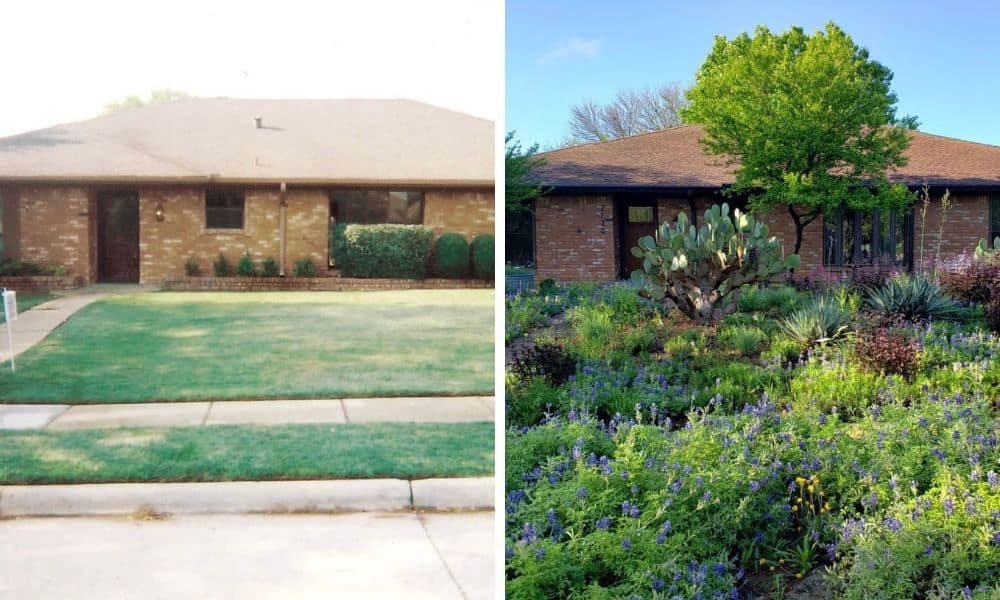
Former turfgrass hellscape conversion to native habitat. Image credit: Michael of Plano Prairie Garden
One of the things we talk about often at RFC is the difference between landscaping and habitat.
A row of trees surrounded by turfgrass may look nice, but a functioning natural community has layers. There are canopy trees, understory trees, shrubs, vines, grasses, wildflowers, leaf litter, fungi, insects, birds, and all kinds of relationships happening between them.
We want our restoration projects to reflect more of that complexity.
As we finalize the Trees for Texans project, we are also looking at whether some of the funding can support native shrubs and other woody species alongside trees. Adding understory plants can increase wildlife value, create better shelter and food sources, and help us build a more complete habitat instead of simply installing isolated trees.
Species selection and placement will matter, too.
We will be thinking about where additional shade is most useful, which species are appropriate for each site, how plants can support wildlife, and how the planting can improve soil and water conditions over time.
In other words, there will be a little more involved than showing up with twenty trees and hoping everybody remembers where we left the shovel.
An Investment That Keeps Growing
One of my favorite things about planting trees is that the project does not really end when planting day is over.
Quite the opposite…
A relatively small tree can eventually shade a gathering space. Its flowers, seeds, fruits, leaves, and branches can support hundreds of other organisms. Its roots change the soil beneath it. Birds may nest in it. Kids who helped plant it may eventually walk past a mature tree and remember when it was small enough to carry.
That long view is a big part of how Rooted Futures Collective approaches conservation. We spend a lot of time thinking about what the people who come after us will inherit.
It is also why the idea of Future Ancestors has become such an important part of our work. Every community inherits the consequences of decisions made years or decades earlier. We have the same responsibility to the people who will live here after us.
Planting a tree may seem like a small act, but landscapes are built from accumulated choices. What we plant now helps determine what Balch Springs will become decades from now.
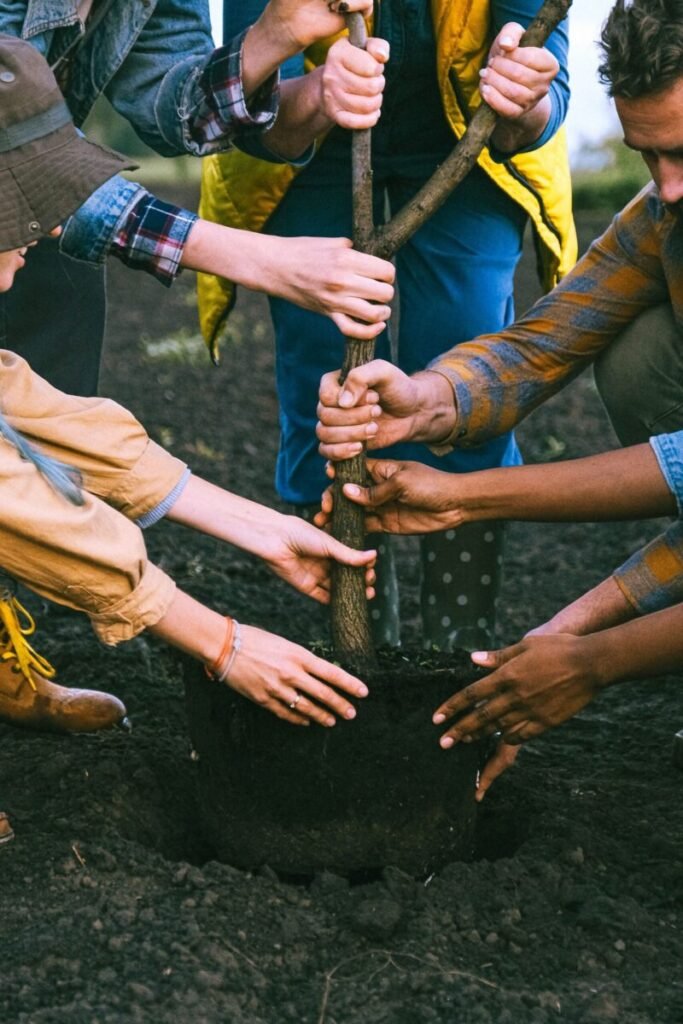
Another Step Forward for Rooted Futures
This grant is also a meaningful milestone for RFC itself.
We are still a relatively young organization, and seeing outside organizations invest in this work tells us that the ideas we have been building around ecological restoration, education, and community stewardship are beginning to turn into something very real.
We are incredibly grateful to H-E-B and the Trees for Texans program for supporting this work and investing in the long-term environmental health of Texas communities.
There is still planning to do before planting day. We will be working through locations, species, logistics, volunteer needs, and the other assorted details that inevitably appear whenever humans decide to organize anything involving dirt.
Once those pieces are finalized, we will share more about the planting and how community members can participate.
For now, though, we are taking a minute to celebrate.
Five thousand dollars. More native trees and habitat. More opportunities for people to participate in restoration. More roots going into the ground in Balch Springs.
That is a pretty good reason to be excited.
Educate. Organize. Regenerate.
Get Involved!
Want to help us build healthier, more resilient landscapes in Balch Springs?
Visit rootedfuturescollective.org/get-involved to learn more about our projects, volunteer opportunities, partnerships, and ways to support Rooted Futures Collective.