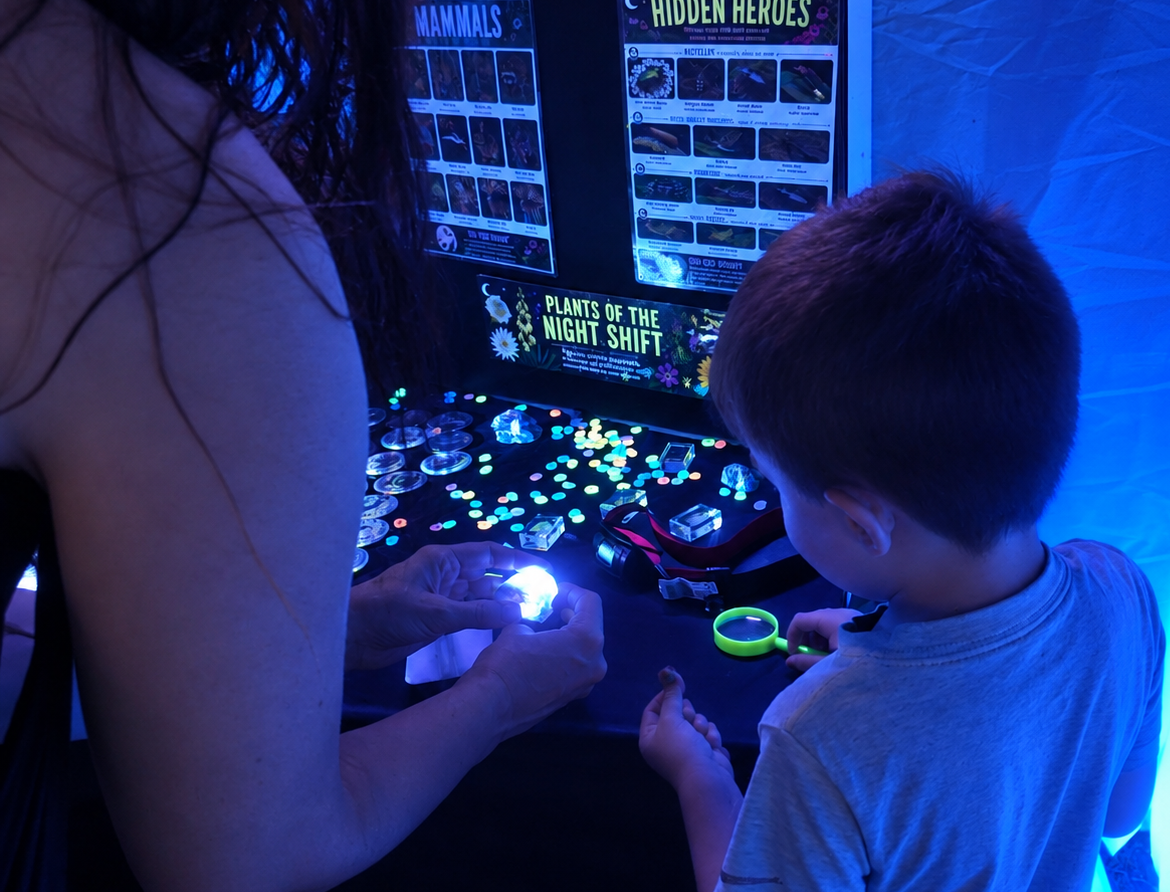
A little boy arrived at one of our recent moth nights absolutely terrified of bugs. His mom warned us ahead of time. Bugs freaked him out. He wanted nothing to do with them.
That lasted maybe five minutes.
Before long, he was running back and forth between the moth sheets, trying to see everything at once.
“What’s this one?”
“Look at those colors!”
“Oh my goodness, look how cool it is!”
By halfway through the night, this same child who had arrived afraid of insects was sticking his face into clouds of moths, midges, and mayflies as they fluttered around him, giggling as they tickled his cheeks. He wanted to know their names. He wanted to know what they were doing. He wanted to see the next one.
By the end of the evening, he declared it the “best night ever.”
It would be easy to dismiss a moment like that as something small.
I don’t.
As a conservation biologist, those are some of the moments I value most. They are the beginnings of relationships. Fear becomes curiosity. Curiosity becomes understanding. Understanding can eventually become stewardship.
Increasingly, I have watched that transformation happen through an institution we do not always think about when we talk about conservation:
The public library.
Conservation Is About More Than Land
We tend to associate conservation with forests, prairies, wildlife, waterways and other natural resources. Those things absolutely need protecting.
Communities have ecosystems, too.
Libraries are part of our civic ecosystem.
They are among the increasingly rare places where someone can exist without being expected to buy something. They provide access to books and technology, certainly, but also education, connection, culture, public space, opportunity and, sometimes, the basic resources a person needs to get through a difficult season of life.
For children, especially, a library can become the doorway to a much larger world.
That is something I have been fortunate enough to witness firsthand through the partnership between Rooted Futures Collective, the Balch Springs Library-Learning Center and the Friends of the Balch Springs Library.
At Storytime in the Garden, I have watched children who initially wanted absolutely nothing to do with insects become fascinated by preserved specimens they suddenly could not stop touching and examining.
At our Night Shift moth events, I have watched fear disappear in minutes.
Books and lessons spill beyond the library walls and into the living world around them. A child can hear a story about a pollinator and then walk outside and find one. They can learn about decomposition and then turn over a log. They can read about the life cycle of a butterfly and then discover a caterpillar eating the plants growing just beyond the library door.
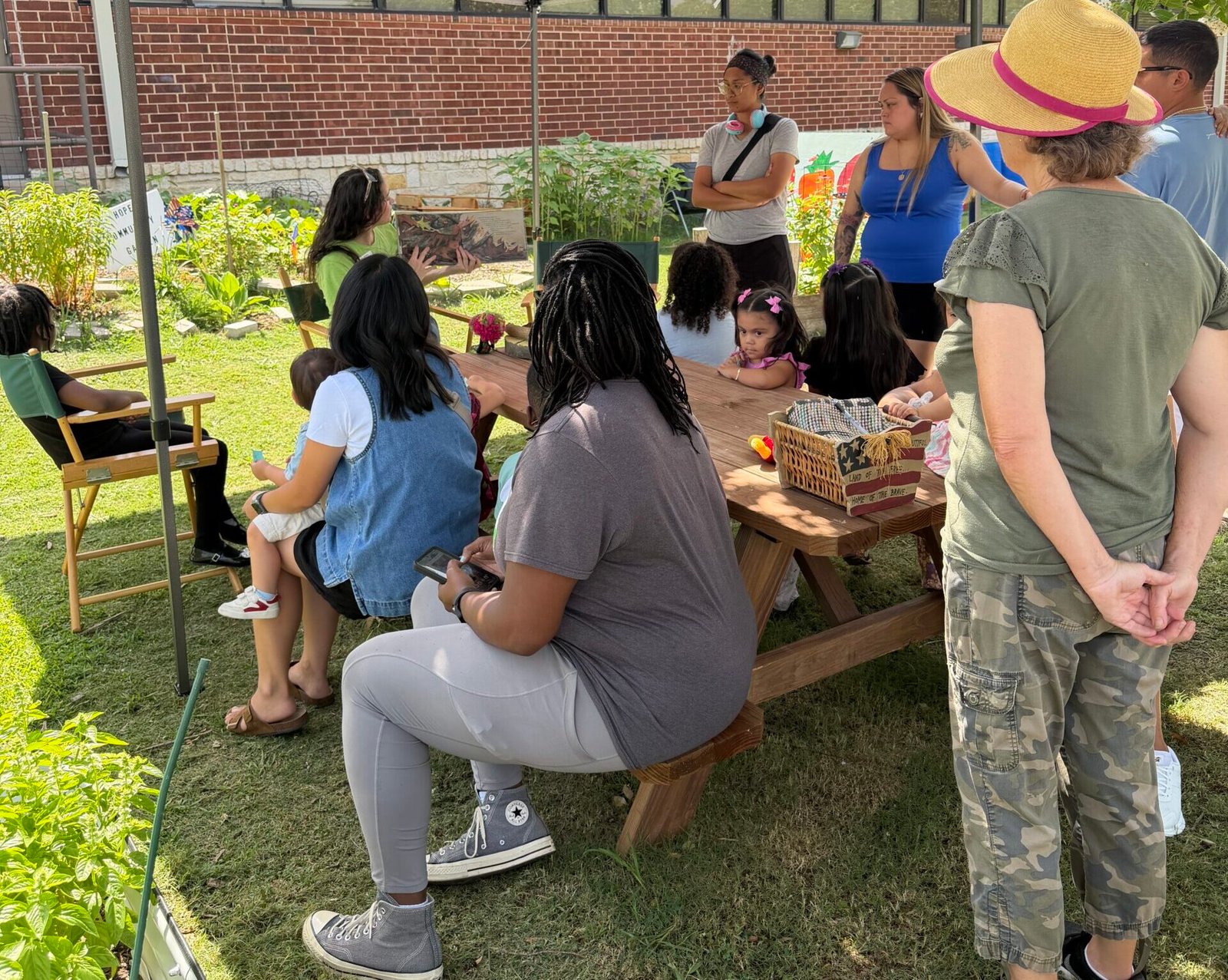
The Future Ancestors Library Garden & Learning Center is being built around exactly that idea:
The library does not have to end at the library door.
It can become a place where literacy, ecology, science, culture, food, art, history and community meet.
More Than Books. Much More.
There is another side of this story that is easier to overlook.
A public library is also essential infrastructure:
Someone without reliable internet access still needs to apply for a job…
Someone who has never written a résumé still needs a way into the workforce…
An adult who did not finish high school still deserves another path toward an education…
A teenager deserves to learn how credit works before a financial mistake follows them for years…
A parent whose children depend on school meals still has to feed those children when school closes for the summer…
A senior navigating an increasingly digital world should not be left behind simply because nobody ever taught them how to use the technology everyone else assumes they understand…
A family facing a crisis may not even know which agency, nonprofit, benefit or service can help them…
Sometimes, the library does not have to provide the final service itself. Sometimes its role is knowing where to send someone next. For a person trying to navigate a maze of agencies, nonprofits, applications, websites and eligibility requirements, that connection can be every bit as important as the service itself.
Here in Balch Springs, our library has long played both roles.
Over the years, the Balch Springs Library-Learning Center has provided workforce development and job-search assistance, computer and digital access, financial education, adult learning opportunities and connections to community resources.
Its history includes free GED, adult literacy and English-language instruction offered through partnerships with what is now Dallas College. Today, the library continues to serve as a workforce and resource hub, helping residents navigate employment, technology and community services.
During the summer, that role can become even more fundamental. Through programs such as Nourish2Flourish, the library has helped connect children and families with food during months when students who rely on school meals can face a very different reality at home.
These are not luxuries.
They are pieces of the social infrastructure that allow people to participate in their communities and, sometimes, simply survive a difficult period in their lives.
My partner, Balch Springs City Councilmember Vincent Gabriel, knows something about those barriers personally.
As a teenager, he experienced homelessness. The instability forced him to leave high school before he could graduate.
Years later, the Balch Springs Library-Learning Center became part of his path back. He was one of the residents who came through its doors for GED classes.
That history gives another story particular meaning to me.
Go to the Library.
Not long ago, Vincent encountered a man in our community who was also experiencing homelessness. We had seen him walking through our neighborhood for some time. That day, he talked about something painfully ordinary.
He wanted to work. He desperately needed income. He needed resources. He was trying to figure out where to begin.
Vincent suggested that he go to the Balch Springs Library-Learning Center.
The recommendation sounds remarkably simple:
Go to the library.
Yet Vincent was not offering that advice from a distance. He knew what housing instability could take from a person. He also knew those library doors because, years earlier, he had walked through them looking for an opportunity himself.
A few weeks later, the two crossed paths again.
This time, the man was exuberant.
He thanked Vincent for sending him there. The library had helped connect him with resources and navigate his search for employment.
He’d found a job.
He was getting help.
He was beginning to find a path forward.
I keep thinking about that story.
We live in a world where someone in crisis can be sent from office to office, website to website, phone number to phone number, repeatedly being told that they have reached the wrong place. Navigating that system is difficult enough when you have stable housing, reliable transportation, internet access, a computer and a working phone.
Imagine trying to navigate it when you don’t.
Yet there was a public building in our city where this man could walk through the door without an appointment, without buying anything and without first having to prove that he belonged there.
He could simply ask for help.
…and someone helped him.
That may be one of the most important things a public institution can do.
Their circumstances are not identical. People experiencing homelessness do not have interchangeable stories.
The connection between them is something else.
Years ago, a young man whose education had been interrupted by homelessness eventually found another opportunity through his community library.
Years later, when he encountered another person experiencing homelessness searching for his own way forward, he knew one door he could point him toward.
The library.
Because when we talk about losing a library, we are not talking about losing a room full of books.
We are talking about potentially losing one of the few places in a community where a child can discover science, a person without a computer can apply for a job, an adult can pursue an education, a teenager can learn how to manage money, a hungry family can be connected with food, and someone with nowhere else to turn can walk through a door and ask another human being:
Can you help me?
Sometimes, the answer changes the trajectory of a life.
That is something worth conserving.
Balch Springs Has Built Something Worth Protecting
This is not an insignificant little library tucked away in a small city. Since opening in April 2006, the Balch Springs Library-Learning Center has welcomed more than 80,000 visitors annually while steadily expanding what the word library can mean.
Its collection includes more than 30,000 physical items and access to more than 100,000 downloadable resources. Its services extend well beyond circulation, including public computers, workforce development and community programming.
Its work has also been recognized beyond Balch Springs.
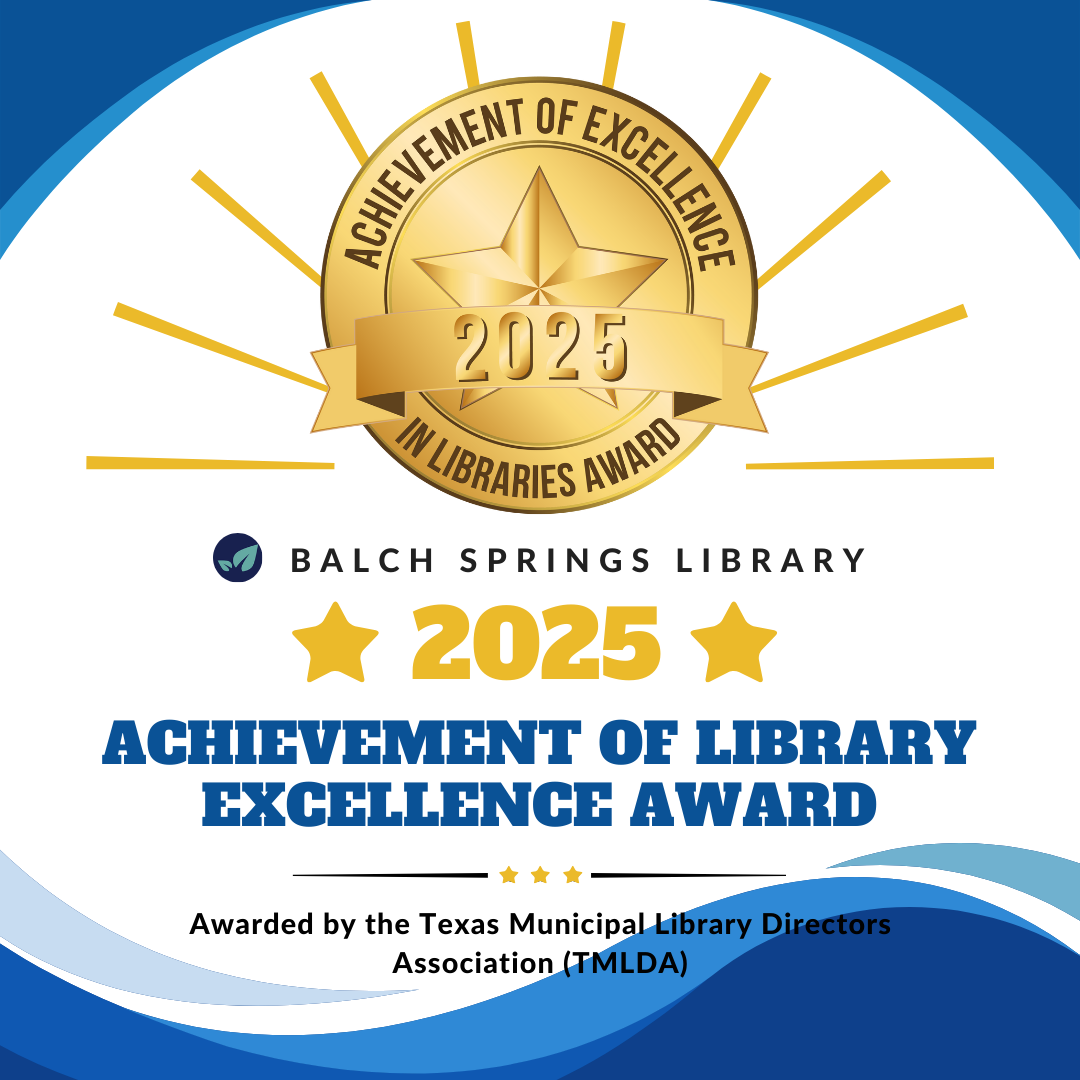
Most recently, the Balch Springs Library-Learning Center received the 2025 Achievement of Library Excellence Award from the Texas Municipal Library Directors Association, continuing a record of recognition that includes receiving the same distinction for 2021.
The award recognizes Texas public libraries that demonstrate excellence across areas including services to underserved populations, literacy support, workforce development, educational programming and community engagement.
More recently, the Texas State Library and Archives Commission highlighted Balch Springs as an example of responsive, community-centered library programming, particularly its willingness to listen to residents and build programs around real-life needs.
That work continues.
In 2026, state grant support included funding for the library’s Unearth a Story summer reading program and Knowledge for Every Stage, an initiative developed with community partners to support residents at different stages of life.
This is not an institution sitting still.
It is growing.
That matters, especially now.
When Communities Are Being Asked to Do More With Less
Across North Texas and beyond, communities are having increasingly difficult conversations about the future of their libraries. Budgets are strained. Services are being reconsidered. Branches face uncertain futures. Programs that residents depend upon can disappear surprisingly quickly when funding and public support disappear beneath them.
The pressures facing libraries do not make them less necessary.
They make them more necessary.
People still need internet access.
Children still need places to learn.
Families still need activities they can afford.
Job seekers still need help.
Adults still need educational opportunities.
Seniors still need connection.
People still need somewhere they can belong without first reaching for a wallet.
Our response in Balch Springs should not be to wait until something disappears before realizing how much we depended upon it. We should be asking how much more our library could become.
That is where the Friends of the Balch Springs Library matter enormously.
Who Helps the Helpers?
Friends groups are sometimes treated as peripheral organizations. The nice people who hold book sales, collect donations and volunteer at events.
They can be much more than that.
A strong Friends organization can advocate for its library, raise funds, recruit volunteers, develop partnerships, support programming, expand community visibility and help transform ideas into things a municipal budget alone might never make possible.
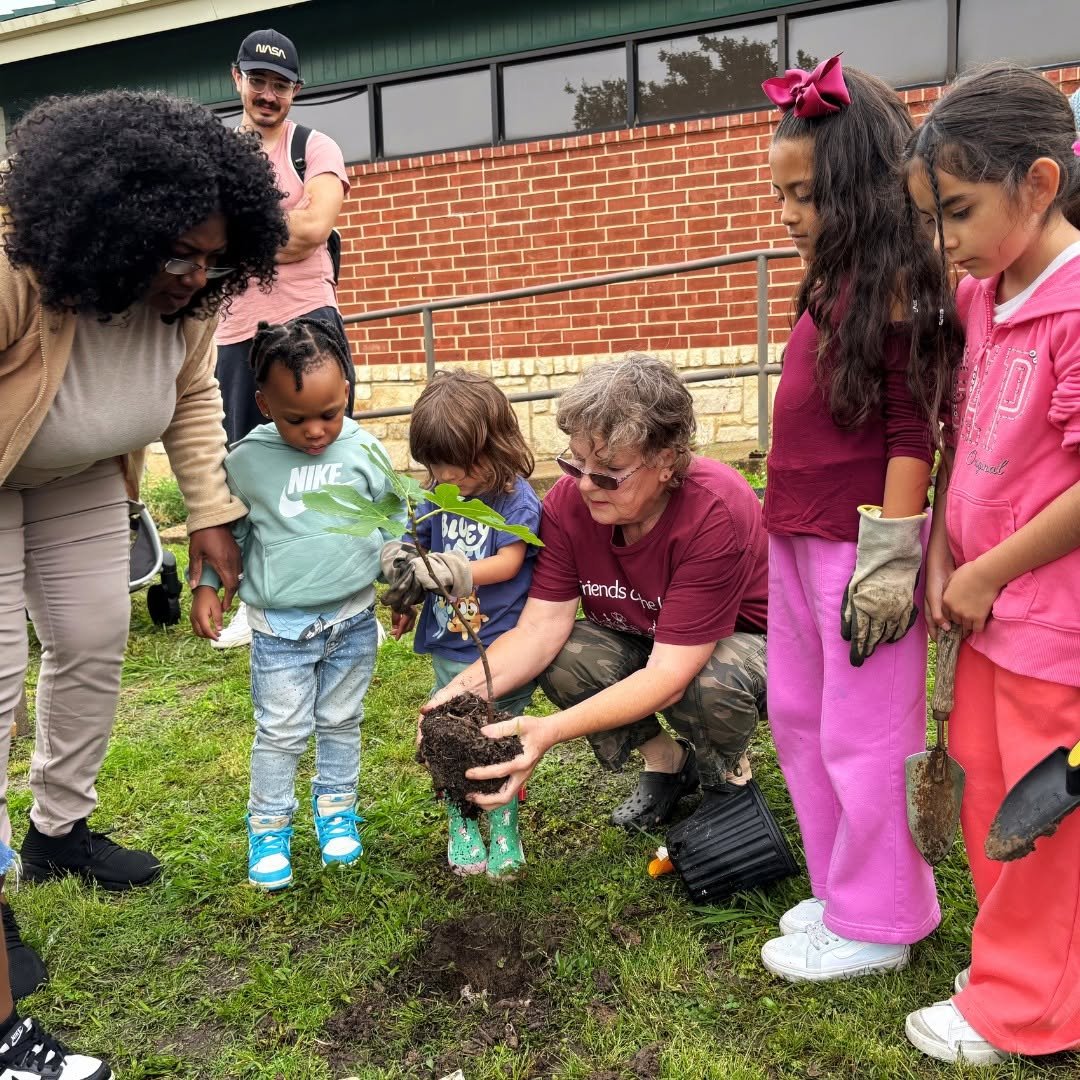
Our Future Ancestors Library Garden expansion of the Hope Community Garden is one example of what becomes possible when those relationships begin connecting.
Rooted Futures brings conservation education, ecological restoration, community partnerships and environmental programming into the library ecosystem. The Friends help strengthen the community support surrounding the institution. Library staff bring their extraordinary knowledge of the people they serve.
None of us replaces the others.
We build capacity around one another.
That is what a healthy ecosystem does.
Yet there is an uncomfortable reality behind all of this: The people and organizations supporting our community institutions need support themselves.
The Hard Part Is Showing Up
People are tired.
Families are stretched financially. People are working longer hours, raising children, caring for parents and partners, managing disabilities, worrying about groceries and rent, and carrying an extraordinary amount of uncertainty.
I understand that more than I can adequately express.
Sometimes asking someone for one more volunteer hour feels unreasonable when they barely have an hour left for themselves. Still, our institutions cannot survive indefinitely on the labor of the same handful of exhausted people.
Community is not something that simply exists around us.
It is something we maintain.
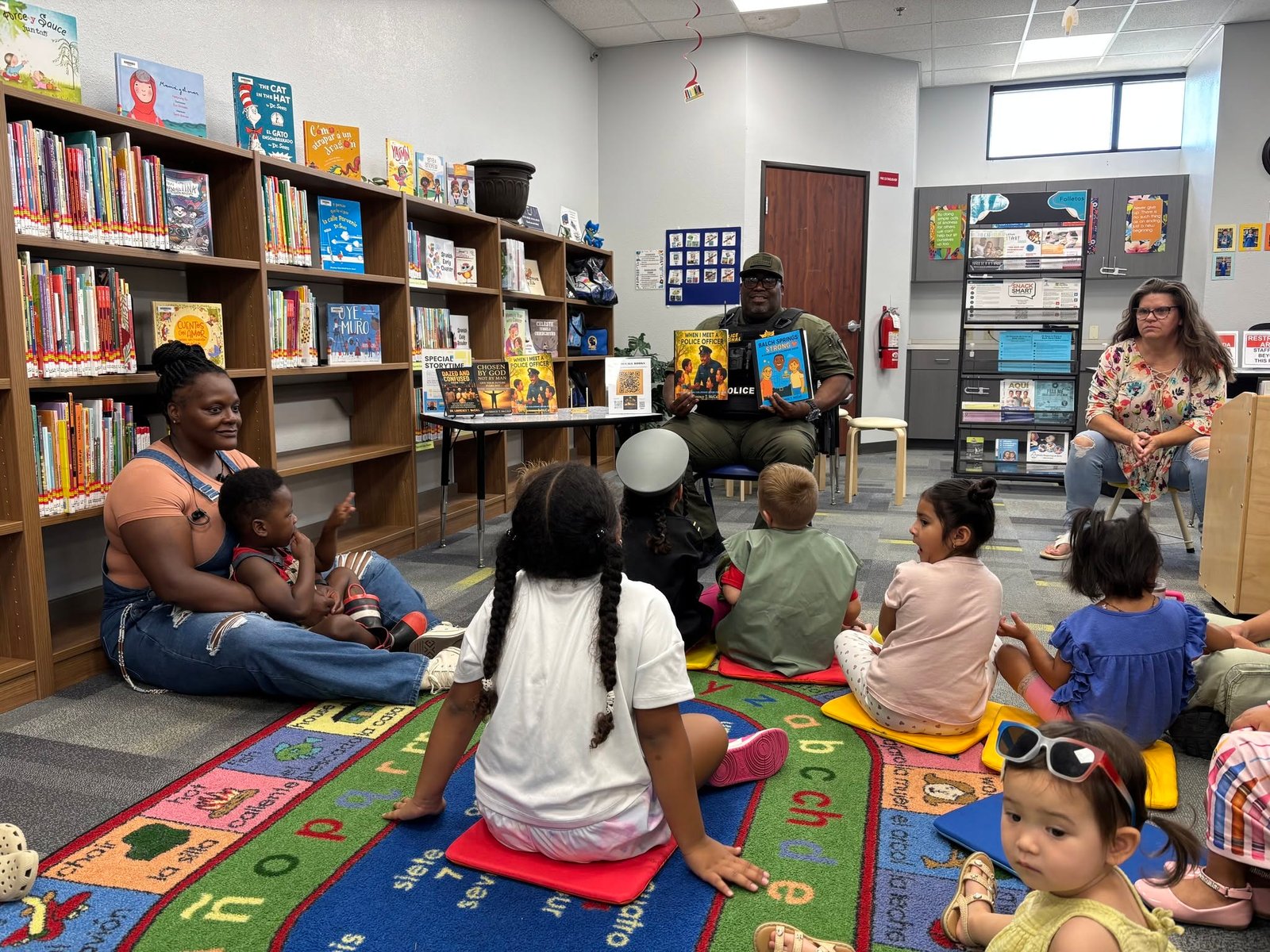
The Friends of the Balch Springs Library are working to strengthen the organization so it can do more of exactly that. That requires more members, more volunteers, stronger partnerships and broader community investment. Not everyone needs to serve on a board or attend every meeting.
Support can mean joining a committee. Volunteering for an event. Becoming a member. Donating. Lending professional expertise. Sponsoring a program. Making a business connection. Helping with outreach. Sharing a fundraiser. Or simply telling someone else that this organization exists.
For people, businesses, foundations and organizations outside Balch Springs, support matters too. A relatively modest investment in a community like ours can have an enormous impact.
A donation can become a children’s program.
A sponsorship can become science equipment.
A partnership can become a workshop.
A volunteer can become the adult who answers one child’s question and sends them down an entirely new path.
A garden bed can become someone’s first encounter with a native bee.
A librarian with the resources and community partnerships they need can help someone find employment.
Small investments do not necessarily produce small outcomes. Sometimes they produce the “best night ever.” Sometimes they produce a job.
Balch Springs Deserves to Be Known for What We Build
There is another reason this matters deeply to me.
Too often, stories told about communities like Balch Springs are stories about what has gone wrong. Sometimes those stories need to be told. Accountability matters.
They are not the entirety of who we are.
There are children here discovering moths for the first time.
There are families showing up for storytime.
There are librarians helping people find jobs and navigate technology.
There are people teaching financial literacy.
There are organizations connecting families with food and resources.
There are residents planting native plants, documenting biodiversity, reading books, teaching children, sharing knowledge, volunteering and imagining what this community could become.
There are people here trying very hard to build something.
I want more people to see THAT Balch Springs.
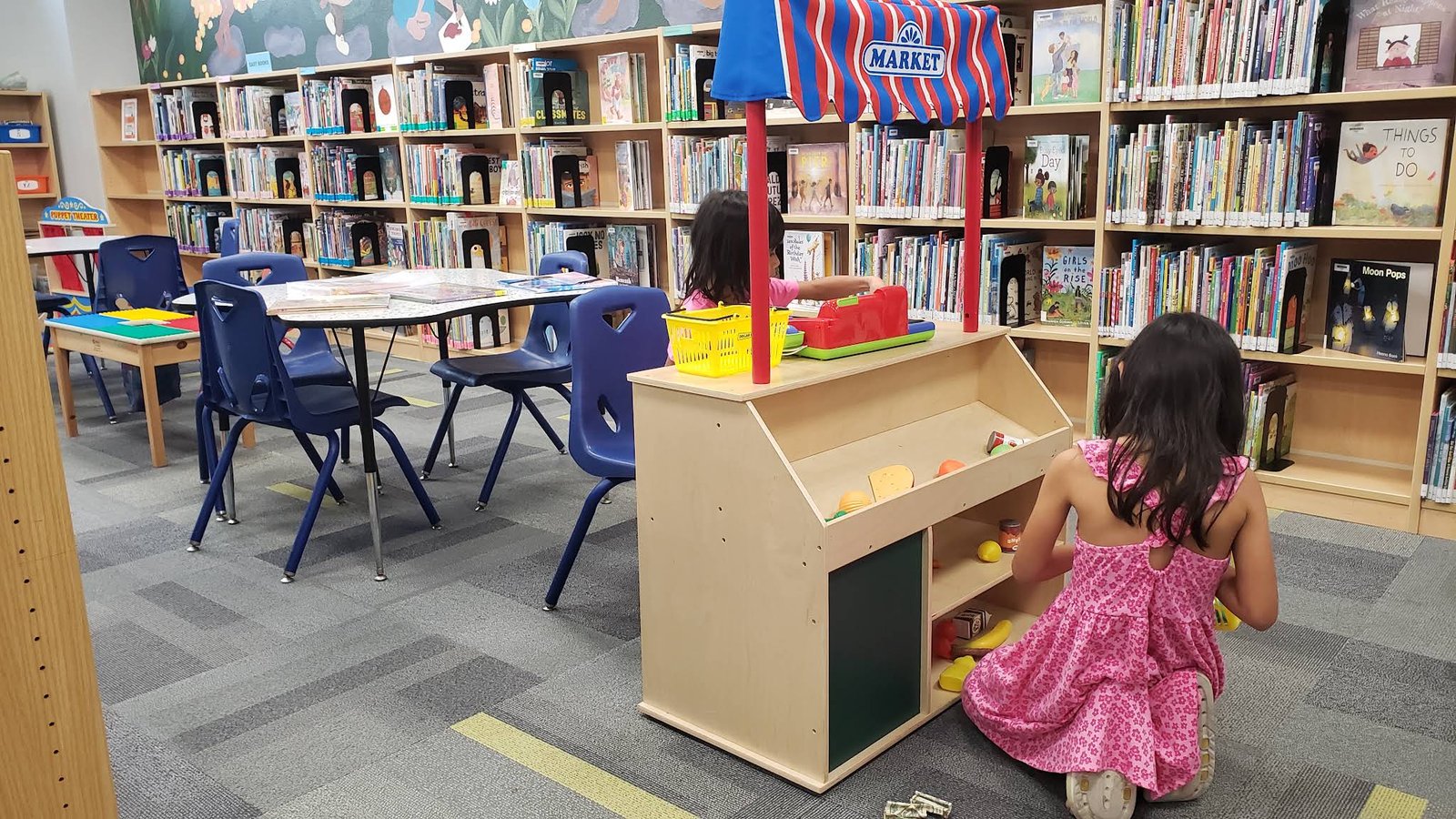
I want people outside our city to understand that investing in a small community like ours can have an extraordinary impact. Somewhere in Balch Springs, there is another kid who thinks bugs are terrifying.
Maybe we get them through the library door with a story.
Maybe they wander into the garden.
Maybe someone puts a preserved beetle in their hand.
Maybe they show up for moth night.
Maybe five minutes later, fear becomes curiosity.
Maybe curiosity becomes love.
Maybe years from now they become an entomologist, an ecologist, a gardener, a teacher, an engineer, or simply an adult who understands that the tiny creatures sharing their neighborhood have value.
We cannot know.
There is also someone trying to find work…
Someone who needs to learn how to use a computer…
Someone trying to finish an education they had to leave behind…
Someone worried about feeding their children…
Someone who has no idea which agency they are supposed to call…
Someone who simply needs somewhere to go…
We cannot know what happens next for them, either.
We can make sure the door is still there.
Conserving the Heart of a Community
Conservation is ultimately an act of deciding that something has enough value to carry forward.
We conserve prairies because future generations deserve wildflowers and monarchs.
We conserve waterways because future generations deserve clean water.
We conserve species because the world is diminished each time we lose one.
We conserve knowledge because future generations deserve to understand the world they inherit.
We should conserve the institutions that make those connections possible for exactly the same reason.
A library is not merely a building full of books. It is one of the places where a community takes care of its people.
It is where we preserve knowledge and create new curiosity. Where someone can seek opportunity without having money. Where children can discover worlds their families may never have been able to show them. Where people can ask for help. Where neighbors can meet. Where community organizations can find one another.
It is where we teach the next generation what is worth knowing, what is worth caring about and, sometimes, what is worth protecting. That makes supporting our libraries an act of conservation, too.
The little boy who came to moth night afraid of insects and the man who walked into the library looking for help may seem to have very little in common. I think they tell us the same thing.
Someone opened a door for them.
Vincent knows something about that door, too. His path through it began with an education interrupted by homelessness and, years later, an opportunity to continue what circumstances had forced him to leave behind. Eventually, he found himself in a position to point someone else toward that same place. We cannot possibly know how far those ripples will travel.
The child fascinated by moths may carry that curiosity for the rest of his life. The man who found employment may someday be the person who tells someone else where to go when they need help.
That is how community capacity compounds.
Strong institutions do more than provide services in a particular moment. They give people knowledge, opportunities and connections that people carry back into their communities.
They keep doors open.
Our job is to make sure they stay that way.
That is a future worth conserving.
About the author: